Chase a Storm Co-op Crew: Roles & Callouts
Turn a random lobby into a storm-chase unit that films more and wipes less.
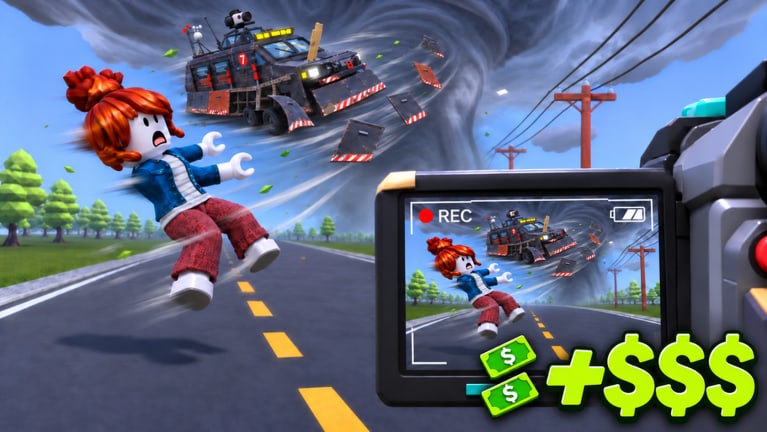
Chase a Storm is built for 1–4 player co-op. You can solo the fantasy, but a coordinated crew turns chaotic wedges into repeatable Storm Points. This guide covers role splits, voice callouts, convoy habits, and how to scale from duo to full squad without everyone talking over the camcorder.
For personality fits and who should main each seat, continue into Crew roles. For the money loop behind good teamwork, keep Storm Points open.
Why roles beat “everyone freestyle”
Without roles, four players create four steering opinions and zero clean frames. With roles, each brain owns one failure mode:
| Role | Owns | Failure if ignored |
|---|---|---|
| Driver | Lines, speed, abort execution | Truck faces the wrong way when debris arrives |
| Cameraman | Battery, framing, record toggles | Empty camera at the feature |
| Spotter | Vortex motion, debris, lightning tells | Surprise loft / side impact |
| Navigator | Exits, next cell path, timing | Dead-end field, no corridor |
Duos merge roles (driver+nav, camera+spot). Trios usually leave navigation light on the spotter. Solos rotate attention on a timer.
Pre-chase crew ritual (90 seconds)
- Pick tornado target type (rope / cone first if anyone is new).
- Assign seats out loud.
- Name the escape road before you roll.
- Confirm battery % and interceptor choice (Chase checklist).
- Agree on an abort word (“break,” “out,” “bail”) that ends debate.
Crews that skip this ritual argue mid-hail. Mid-hail arguments are free wipes (Survive hazards).
Callout language that stays short
Use compact phrases:
- “Vortex left to right, medium pace”
- “Debris right, heavy”
- “Lightning dense—keep rolling”
- “Battery 30—two more takes”
- “Exit south road hot”
- “Bail, bail” (everyone stops filming hero ideas)
Ban novels. If a call needs a paragraph, you waited too long.
Convoy and vehicle tips
Full servers may field more than one chase vehicle depending on lobby design and player count. Even in a single truck, think like a convoy:
- Lead brain (driver/nav) dictates pace; trail players do not overtake into the debris envelope for clips
- Keep spacing so one debris event does not multi-kill stacked hitboxes
- If you bring mixed interceptors, put the durable platform (USAV / Dominus line) as the filming anchor and the agile Siv 2 as pathfinder—see Interceptors
- Never split so far that spotter calls cannot reach the cameraman in time
When the studio’s six-interceptor roster expands your garage, specialize: one heavy filmer, one scout, one trainee starter truck for new friends (Interceptors update).
Duo playbook
Driver / Navigator hybrid + Cameraman / Spotter hybrid is the default.
- Driver narrates road choices; camera confirms when tape rolls
- Spotting is a shared glance but camera player has final say on “dirty frame—push out”
- After each abort, 10-second debrief: what hazard won?
Duos should main cones and clean wedges before rain-wrapped exams (Tornado types).
Trio playbook
Add a dedicated spotter. Instant upgrade. Driver can focus on asphalt; cameraman on composition; spotter on peripheral death.
Navigator duties split between driver (micro) and spotter (macro cell motion). Establish who owns the abort word—usually spotter or driver, not the cameraman mid-zoom.
Full squad (4) playbook
Now you can run pure roles. That purity is wasted if everyone still drives the conversation.
Priority order during the feature:
- Spotter hazard calls
- Driver abort / line changes
- Navigator exit reminders
- Cameraman battery status
- Hype and jokes (after extract)
Cameraman should not be forced to also pathfind. Navigator should not “borrow” the camera for fun during the money take. Swap seats between chases if you want variety—not mid-wedge.
Voice chat vs text
Voice wins for lightning-speed debris calls. If someone lacks a mic:
- Bind simple chat macros (“bail”, “left”, “right”)
- Put the mic-less player in navigator or trainee camera on calm ropes
- Avoid assigning mic-less players as sole spotter on multi-vortex days
Roblox text latency is a hazard of its own.
Teaching a brand-new fourth player
- Give them spotter or navigator first—not driver on a wedge.
- Run a rope warm-up with abort drills.
- Show battery UI and when to stop recording.
- Link them Getting Started after the session.
- Celebrate Day 1 Completed! energy; do not haze with rain-wrapped dives.
Conflict management mid-chase
If two leads disagree:
- Abort word overrides
- Debrief after extract, not inside hail
- Rotate driver next chase if trust is shaky
- Never “prove a point” by diving closer
Ego clips are how crews dissolve. Shared Storm Points are how they stay together.
Practice curriculum for crews
Session A: role assignment + rope aborts
Session B: cone farming with battery discipline
Session C: wedge with full callouts
Session D: multi-vortex scramble
Optional final: rain-wrapped only if A–D felt clean
Track kept points and wipe rate, not just highlight saves.
Related pages
- Crew roles — deeper seat identity
- Survive hazards — what callouts are fighting
- Storm Points — why teamwork pays
- Chase checklist — pre-flight every time
- Script safety — do not “fix” unfair tools in group play
A great crew sounds calm on voice chat while the sky goes feral. Build that calm on purpose.
Frequently Asked Questions
Quick answers for Chase a Storm players.
How many players can chase together?
Chase a Storm supports 1–4 players. Full squads can run dedicated driver, cameraman, spotter, and navigator roles.
What is the most important co-op habit?
Agree on an abort word and an escape road before you roll. Debate after extract, never mid-debris.
Can two players run an effective crew?
Yes. Merge driver/navigator and cameraman/spotter. Keep callouts short and warm up on rope or cone storms.
Who should control the abort decision?
Usually the driver or spotter. The cameraman can request a push-out for dirty frames, but one voice must own the final bail.
Should we split into multiple trucks?
Only if spacing and voice still work. A durable filming anchor plus an agile scout is ideal; do not scatter beyond callout range.